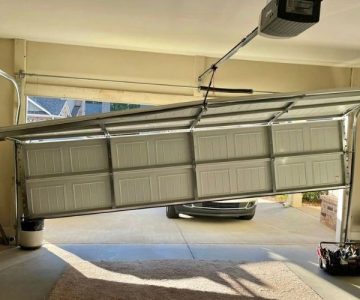
Buying a garage door opener for your Gold Coast home seems straightforward on more info the surface. Dig into the catalogues though, and you'll find four different drive types competing for your money — chain, belt, direct, and screw. Add smart connectivity, app control, and voice integration into the mix, and the simple decision gets complicated fast.
Here tend to be budget units that cost three hundred dollars and premium models that push past twelve hundred. There happen to be openers built for inland conditions and openers built to handle salt air and coastal humidity.
Getting this decision wrong means living with the consequences for years — noisy mornings, surprise repair bills, and replacement costs you didn't budget for. What follows explains the questions every Gold Coast homeowner should ask before committing to a garage door opener, including the local conditions that change which models genuinely work and which don't last on the coast.
How Coastal Living Affects Garage Door Opener Choice
Inland cities like Brisbane and Sydney tend to be fundamentally different environments for electronics than the Gold Coast. Four factors stack against your opener here: ocean-borne salt air, humidity that doesn't drop off seasonally, brutal UV on west-facing garage doors, and a November-to-April storm season that hammers electrical components.
Homes in coastal suburbs including Surfers Paradise, Broadbeach, Mermaid Beach, Burleigh Heads, Palm Beach, and Coolangatta see the harshest conditions because of direct salt exposure. Suburbs further inland like Nerang, Robina, Helensvale, Pacific Pines, and Mudgeeraba face less salt but still deal with humidity that ages circuit boards faster than in cooler southern states.
Walking into a hardware chain and grabbing the cheapest box on the shelf happens to be how Gold Coast homeowners end up replacing openers far earlier than they should. The same unit that runs fifteen years in a Toowoomba garage may only manage seven to ten years here. Knowing the gap upfront helps you decide whether the cheap unit really is cheap once you factor in early replacement.
Choosing Between Belt Chain and Direct Drive Openers
How an opener actually feels to live with comes down mostly to one thing: its drive mechanism. Belt drive openers run a reinforced rubber belt to lift the door — the quietest setup available, producing around fifty decibels against the sixty-five decibels chain drives generate.
The price premium runs fifty to one hundred fifty dollars over the chain equivalent. For anyone with a bedroom above or next to the garage, that premium pays itself back in quiet mornings within the first few weeks. New builds across the Gold Coast now specify belt drive by default for exactly this reason.
Other Drive Types Worth Knowing
Chain drive openers remain the workhorses of the category — bicycle-chain mechanism, lowest upfront cost, longest track record, and the easiest to repair when something goes wrong. The catch tends to be the racket they make on every cycle. Where the garage sits separate from the house or away from sleeping areas, that noise doesn't matter and the chain drive is hard to beat on value.
Direct drive openers represent the newest mechanical approach available locally: a single moving component drives the door, dramatically cutting noise and mechanical wear at the cost of a higher purchase price. Screw drive openers, common in dry American climates, never really took off in Australia — and the Gold Coast in particular happens to be the wrong place for them because humidity wrecks their performance.
The WiFi Opener Features Worth Buying
Smart garage door openers are becoming standard in new installations across the Gold Coast over the last few years. Those three brands most commonly fitted by local installers are Chamberlain, Merlin, and B&D. All three offer WiFi-enabled models that pair with smartphone apps and work with voice assistants like Google Home and Amazon Alexa.
Beyond the marketing hype, smart features earn their keep through specific real-world uses: checking remotely if you forgot to close up, closing the door from anywhere if you did, and getting alerts on every opening and closing. Households with teenagers, owners coordinating tradie visits from the office, and anyone running a holiday let through Airbnb get genuine value from the connectivity.
The smart-feature premium runs about one hundred to two hundred dollars over the standard equivalent — modest enough that most homeowners come out ahead on value.
The one caution with smart openers is that they depend on your home WiFi network being stable and reaching the garage. If your router happens to be at the front of the house and the garage happens to be at the back, you may need a WiFi extender to keep the opener connected reliably. Ask your installer about signal coverage before committing to a smart model.
How to Match Opener Power to Door Weight
Match the opener's power rating to your door's weight or you'll pay for it later. Half-horsepower handles a standard single-car sectional door comfortably. Step up to three-quarter horsepower for double-car installations, insulated panels, or solid timber doors that weigh more. One-horsepower openers are overkill for residential use and sit mainly in commercial or oversized-door applications.
Pairing a weak opener with a heavy door tends to be a quiet way to burn money. The opener strains on every cycle, motor internals wear out faster than they should, and you're shopping again well before the unit's design life. Local Gold Coast installers handle this matching as part of the quote process — but if you're buying through Amazon, eBay, or a hardware chain, the question happens to be on you to ask.
Why Storm-Prone Areas Need Battery Backup
Storm season here runs November to April, and outages come with the territory. Without battery backup built into your opener, a power cut means your garage door stays exactly where it was when the lights went out. For an emergency exit, for an evacuation, or simply for getting to work the next morning, that's a real-world problem rather than a theoretical one.
Budget another one hundred to two hundred dollars at purchase for backup capability — that buys you twenty to fifty operating cycles during an outage. Of all the optional extras a Gold Coast buyer can specify, battery backup probably has the strongest case for being non-optional.
Choosing a Garage Door Installer Worth Their Fee
This installer matters as much as the opener itself. Even a premium Chamberlain or Merlin unit will fail early if it tends to be installed incorrectly. Should choosing a Gold Coast garage door installer, look for technicians with current Queensland trade qualifications, public liability insurance, and a physical premises somewhere on the Gold Coast rather than mobile-only operations.
Read past the star rating on Google reviews and look at what people actually mention. Install quality, after-sale support when something goes wrong, and how quickly warranties get honoured — those are the markers that matter. Three boxes a reputable installer should tick: written quote upfront, minimum twelve-month labour warranty on top of the manufacturer's parts warranty, and genuine OEM fittings rather than cheaper aftermarket substitutes.
Avoid any installer who pressures you to sign on the day, refuses to provide a written quote in advance, or quotes a price significantly below the local market range. Those tend to be common signs of cheap parts, undertrained installers, or no warranty support after the job is complete.
How Much You Should Pay for an Opener
Pricing across the Gold Coast market tends to cluster in three brackets. Standard chain or belt drive units with basic features fall between five hundred and nine hundred dollars supplied and installed. Adding WiFi connectivity, battery backup, and the smart-feature suite shifts you into the nine hundred to fifteen hundred dollar bracket. Direct drive models from premium manufacturers push the top end past sixteen hundred dollars for a complete fit-out.
The ranges reflect typical Gold Coast market pricing as of recent years and can shift over time depending on supplier costs and exchange rates.
The Real Decision for Gold Coast Homeowners
The honest formula for an opener that survives Gold Coast conditions happens to be simple: get the drive type right for your noise needs and price point, choose features that suit your real usage patterns, and find an installer who knows their work and stands behind it. Skipping over any of those three saves money today and costs significantly more later.
What looks like a saving today often becomes the most expensive opener over a fifteen-year window. The remedy tends to be basic homework: compare two or three quotes from genuinely local Gold Coast installers, read their reviews carefully, and ask direct questions about coastal performance and warranty terms. The answers tell you who actually understands the market.
A few hours spent comparing properly today buys you years of not thinking about garage door openers — which happens to be the point of owning one in the first place.